
Precise, Image-Guided Treatment
GAE is performed under real-time fluoroscopic guidance, allowing Dr. Chong to navigate directly to the small arteries feeding inflamed tissue.

Knee Pain Treatment -- GAE
Non-surgical relief for chronic knee pain with image-guided Genicular Artery Embolization.
Chronic knee pain from osteoarthritis can make walking, climbing stairs, and staying active feel difficult or impossible.
Many patients have tried medications, injections, and physical therapy without finding lasting relief and are not ready for, or are not good candidates for, knee replacement surgery.
At Minimally Invasive Vascular, Dr. Kok Chong offers Genicular Artery Embolization (GAE) -- a safe, outpatient procedure that uses image guidance to reduce the blood flow driving inflammation in the knee joint. Without surgery, without general anesthesia, and without a hospital stay, GAE helps patients get meaningful relief from knee pain.
GAE is performed under real-time fluoroscopic guidance, allowing Dr. Chong to navigate directly to the small arteries feeding inflamed tissue.
GAE requires only a small puncture in the wrist or upper thigh -- no incisions, stitches, general anesthesia, or hospital stay.
GAE is designed for patients who want to avoid or delay joint replacement or whose health conditions make surgery higher risk.
Dr. Chong reviews imaging and medical history to confirm candidacy and create a treatment plan based on individual anatomy and symptoms.
Osteoarthritis is the most common cause of chronic knee pain. Over time, the cartilage that cushions the knee joint wears down, leading to inflammation, stiffness, and pain.
The blood vessels supplying the inflamed joint lining play a key role in sustaining that pain, which is the target of GAE.
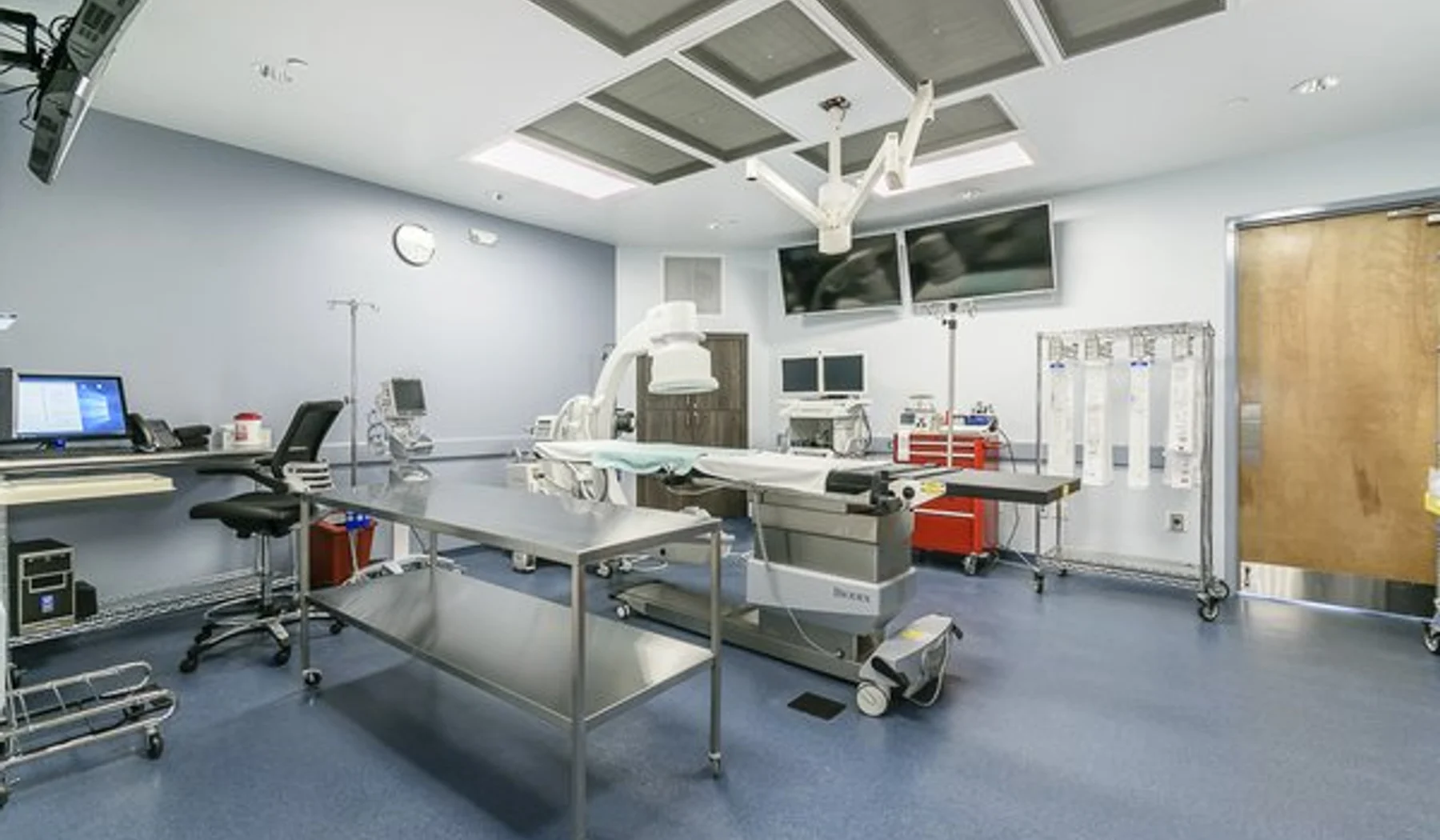
The procedure begins with a small puncture in the wrist or upper thigh. Using live fluoroscopic imaging, Dr. Chong guides a slender catheter to the genicular arteries that supply blood to inflamed regions of the knee.
Tiny, medical-grade particles are delivered into these arteries to reduce blood flow to inflamed synovial tissue, decreasing inflammation and pain signals.
Because GAE involves no cutting or tissue removal, recovery is quick. Most patients resume light activity within 24 hours and notice gradual improvement over the following weeks and months.
Most patients resume light activity within 24 hours and notice gradual improvement over the following weeks and months as inflammation resolves.
Clinical studies show significant and lasting reductions in pain following GAE, with many patients experiencing continued improvement at one and two years.
Published imaging studies show that GAE does not harm cartilage, bone marrow, ligaments, or the meniscus. It addresses the inflammatory blood supply without altering the joint itself.
GAE is best suited for patients with chronic knee pain from osteoarthritis who have not responded adequately to conservative treatments and prefer to avoid or delay surgery.
Yes. GAE is performed under real-time imaging guidance by a trained interventional radiologist. Serious complications are rare.
Approximately one to two hours. Patients are monitored briefly and go home the same day.
Some patients notice improvement within the first one to two weeks. Most experience continued gradual improvement over two to three months.